Interactive whiteboard : screen, system and software
At Speechi, the interactive display is much more than just a display tool. It forms part of a more seamless approach to teaching and collaboration, designed with teachers and their pupils in mind. The interactive whiteboard – comprising a screen, a connected solution and software – transforms teaching practices by bringing content to life, making it interactive and instantly shareable. At Speechi, these devices are designed to integrate seamlessly into both classrooms and training environments.
A modern interactive whiteboard combines several elements: a high-performance touchscreen, a connected solution and intuitive software. This combination goes beyond the traditional whiteboard. Users can annotate, record, share and collaborate seamlessly. Speechi promotes this holistic approach to support teachers in their day-to-day use without complicating their practice.
What are the practical applications in professional and educational settings?
The first question that often comes up is simple: what is an interactive whiteboard actually used for? In a classroom, it becomes a focal point. The teacher can display content, write on the screen and then invite a pupil to interact directly with it. This dynamic helps to hold pupils’ attention and encourages engagement.
In a training context, the interactive whiteboard – comprising the screen, solution and software – helps make sessions more immersive. Participants can annotate documents, complete exercises in real time and visualise complex data clearly. Speechi offers tools designed to facilitate these interactions, even with diverse groups.
In business settings, its uses extend to team collaboration. Meetings, brainstorming sessions and strategic presentations: everything runs more smoothly. Content can be edited in real time, shared instantly and saved effortlessly. This approach reduces information loss and improves productivity.
Hybrid environments are also becoming increasingly important. A remote participant can follow the session, interact with the content and contribute to discussions. This synchronisation between in-person and remote participation provides valuable continuity in professional and educational practices.
Compared to a video projector or a traditional whiteboard, the difference is striking. The interactivity, responsiveness and range of uses transform the experience. Speechi supports this evolution with solutions tailored to teachers’ real needs.
Interactive whiteboard: screen, solution and software – what elements make up a complete system?
A modern interactive whiteboard rests on three essential pillars. The first is the screen. Its size must match the available space, whilst its resolution ensures optimal readability. Touch technologies enable high precision – sometimes multi-touch – for simultaneous interactions.
The second pillar is the overall solution. This encompasses connectivity, available ports, screen-sharing capabilities and integration into an existing network. At Speechi, this aspect is designed to simplify installation and day-to-day use. The aim is to avoid any technical friction.
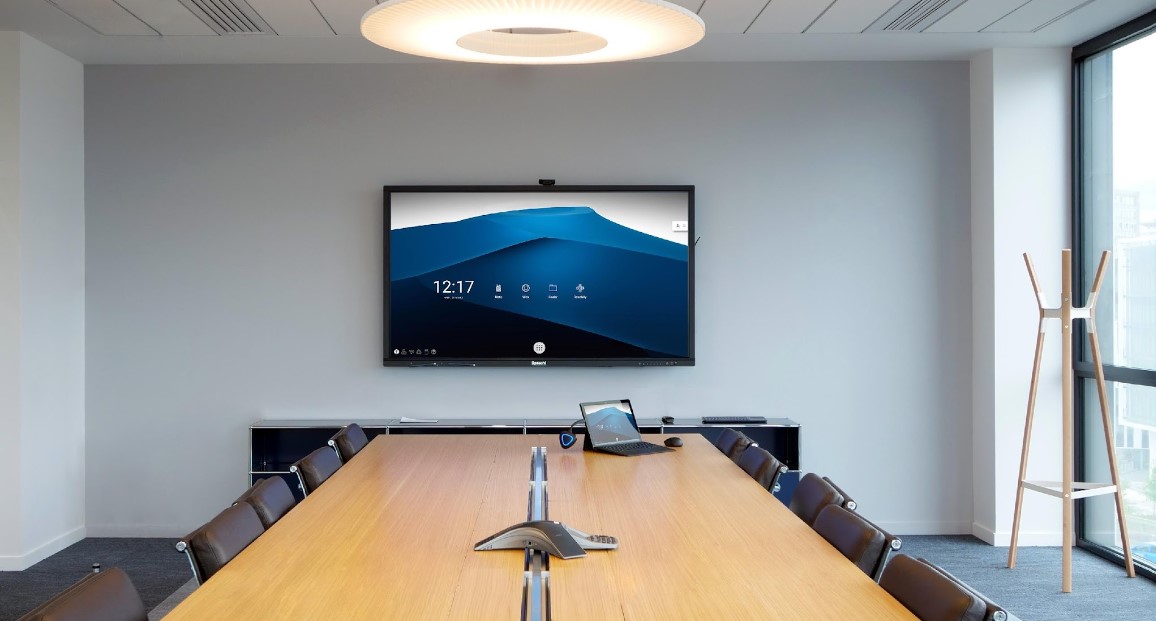
The third pillar is the software. It forms the heart of the user experience. Annotation tools, collaborative applications, compatibility with various formats: everything must be quickly accessible. Good software allows you to switch from one activity to another seamlessly.
These elements work together to deliver a seamless experience. Here is what is typically found in a complete system:
- A high-definition touchscreen suited to the size of the room
- A connectivity solution enabling wireless sharing
- Annotation and collaboration software
- Accessories such as styluses or mobile stands
- Compatibility with different operating systems
Ease of use remains a key factor. A teacher does not want to waste time setting up a tool. Speechi emphasises this fluidity with interfaces designed for quick and easy adoption. Maintenance and updates must also be unobtrusive so as not to disrupt usage.
How can you choose the right solution for your needs without making a mistake?
Choosing an interactive whiteboard – screen, system and software – requires a little thought beforehand. The size of the room directly influences the choice of screen. A small room does not have the same requirements as a lecture theatre.
The number of users also plays a role. A classroom with several active pupils requires smooth, multi-user interactivity. Frequency of use is another factor. Daily use calls for robust and reliable equipment.
The type of content displayed also warrants particular attention. Videos, documents, interactive applications: each use case requires tailored performance. In an educational context, the range of media can be very broad.
Budget remains a criterion, but it should not be the only one. Indirect costs can be significant:
- Installation and configuration
- User training
- Maintenance and updates
- Additional accessories
Speechi emphasises the importance of defining your actual needs before comparing options. Focusing solely on technical specifications can lead to ill-suited choices. A suitable solution must integrate naturally into existing practices.
Certain pitfalls should be avoided, such as choosing a tool that is too complex or ill-suited to users’ skill levels. An intuitive interface encourages adoption. The aim remains to make work easier, not more complicated.
Interactive whiteboards: screens, solutions and software at Speechi – what challenges lie ahead for the future of collaborative working?
At Speechi, the interactive whiteboard is part of a profound transformation of educational and professional practices. Spaces are becoming more digital, more flexible and better connected. This shift is influencing the way we teach and collaborate.
Expectations are shifting towards greater simplicity and mobility. A teacher wants to be able to launch an activity quickly without complex procedures. A trainer wants to adapt their content in real time. Speechi develops solutions that meet these expectations with a pragmatic approach.
Remote collaboration is becoming increasingly important. Tools must enable seamless interaction between participants, whether they are physically present or not. This continuity creates a consistent experience.
The challenges of adoption remain crucial. Even a high-performance tool must be accepted by its users. Training plays an important role here. Tailored support helps to overcome barriers and encourage regular use.
Speechi addresses these aspects by offering clear interfaces and accessible features. The aim is to make the technology almost invisible, serving the educational process.
In the future, the interactive whiteboard – comprising the screen, solution and software – will continue to evolve. Interactions will become more intuitive and the user experience even more immersive. For teachers, this opens up exciting prospects with tools capable of adapting to every learning context.
Discover other interesting articles : Digital whiteboard prices, Digital whiteboards size and Digital whiteboards for companies.